
Operating Temperature Range
Energy Density
Continuous Output Power
Empowering Global Robotics Innovation with Leading Cell Technology
With years of dedicated expertise in the robotics power sector, Tenpower has served as a core supplier to Unitree Robotics since 2021. Today, we have established strategic partnerships with top-tier robotics enterprises, including AgiBot and Deep Robotics, achieving an annual shipment volume of millions of units.
Recognized as the world’s second-largest manufacturer of high-rate cylindrical cells, Tenpower features an Tabless product series designed for low internal resistance and exceptional peak power output. Thoroughly verified under extreme operating conditions across industrial transport, warehouse automation, service sector, and security patrol applications, our solutions inject safe, reliable, and high-performance energy into next-generation robots.

Transient High-Rate Pulse Discharge. Coordinated multi-joint servo motors require instantaneous pulse currents ranging from tens to hundreds of amperes during deep squats, rapid jumps, and heavy-load handling.
Dynamic Response & Payload Lightweighting Demands. Battery mass directly adds parasitic load to joint actuators, demanding ultra-high energy density and instantaneous burst power within strictly constrained weight and volume limits.
Thermal Runaway Risk in Confined Spaces. Cells packed densely in torso or back cavities are co-located with main control units and joint gearboxes; restricted heat dissipation makes thermal accumulation a critical trigger for thermal runaway.
Continuous Discharge: 50-90A
Pulse Discharge: 300 A(500 ms)
Energy Density: ≥ 265 Wh/kg
Adopts a full-tabless current collector design that shortens electron transport paths by over 80% and reduces AC internal resistance to 3 mΩ, substantially curbing ohmic heating and temperature rise under high-current operating conditions.
Powered by proven high-nickel NCM/NCA chemistry with single-cell energy densities of 265–350 Wh/kg, significantly minimizing pack volume and weight to unlock mechanical design flexibility.

High-Frequency Mechanical Shock & Vibration Stress. Intense mechanical shocks from running, obstacle negotiation, and terrain transitions transmit directly to the battery pack, imposing stringent requirements on internal tab joint integrity and vent valve reliability.
Harsh Environmental Adaptability. All-weather outdoor operations (e.g., automated inspection) face extreme cold and heat: extreme cold drives internal impedance spikes and capacity drops, while extreme heat escalates heat accumulation and safety risks.
Constrained Chassis Space & Power Load Bottlenecks. Quadruped robots have severely constrained internal space, requiring high power output and rapid dynamic response within an extremely limited volume and weight budget.
Nominal Capacity: 2,000 – 5,000 mAh
Continuous Discharge: 30 – 45 A
Energy Density: 265 Wh/kg
Reinforced jelly-roll anchoring and advanced tab welding, paired with high-performance damping pads, reliably withstand high-frequency vibrations and dynamic stress impacts across rugged terrains.
Utilizes a wide-temperature, low-impedance electrolyte system to guarantee broad-temperature cycling stability and continuous high-current power delivery, effectively preventing low-temperature lithium plating and high-temperature thermal runaway.
High-Intensity Utilization & Extended Cycle Life Requirements. Equipment operates under continuous, high-load 24/7 regimes (two- or three-shift rotations); frequent charging and cycling place stringent demands on cell degradation rates.
High Sensitivity to Total Cost of Ownership (TCO). Frequent cell replacements or unscheduled downtime incur substantial maintenance and operational expenses; platform designs are extremely sensitive to cost per watt-hour and levelized cost of energy (LCOE).
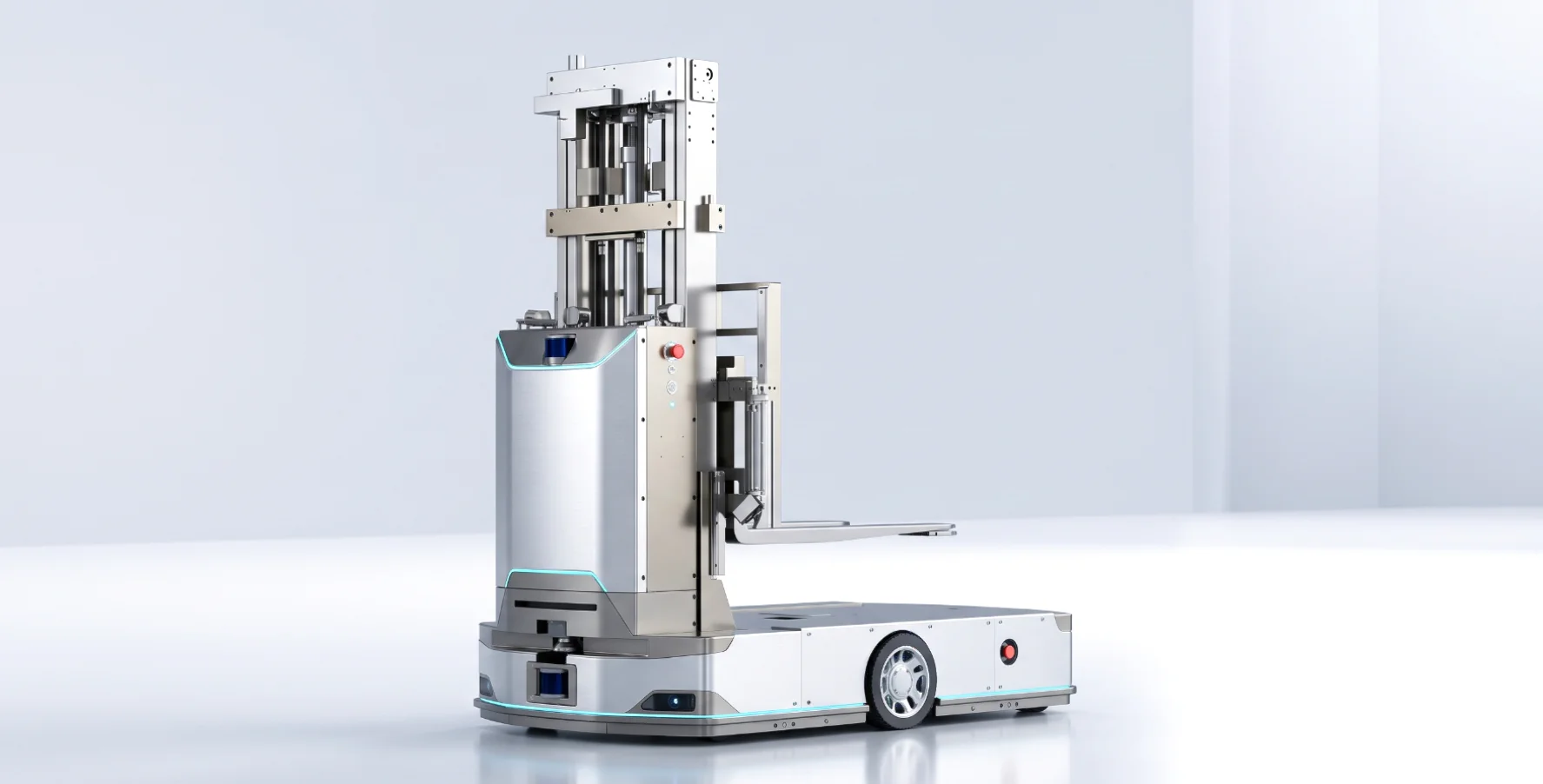
Demanding Intrinsic Safety in Industrial Environments. Navigating automated high-bay warehouses and human-robot collaborative shop floors, battery thermal runaway triggered by collision, internal short-circuit, or overcharge risks catastrophic facility fires and collateral damage.
Cycle Life: ≥2,000 cycles
Intrinsic Safety: Passed rigorous abuse tests including nail penetration, crush, and overcharge
Operating Temperature: -20°C – 80°C
The stable crystalline structure of Lithium Iron Phosphate (LFP) delivers exceptional thermal and chemical stability, ensuring 4–5+ years of maintenance-free service to significantly reduce ongoing pack replacements and lifecycle upkeep costs.
Engineered with robust thermal runaway tolerance: remains non-flammable and explosion-free even under severe abuse conditions such as mechanical crush, nail penetration, overcharge, or deep overdischarge—delivering uncompromising protection for factory assets and personnel.
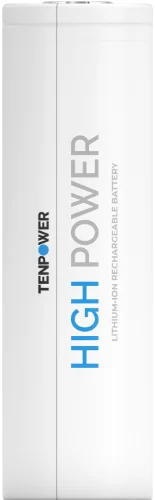
Tenpower INR21700-40TG |
Tenpower INR21700-50SG |
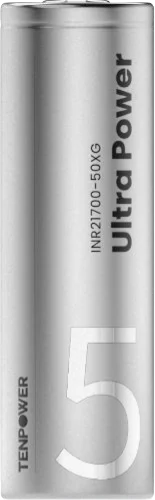
Tenpower INR21700-50XG |
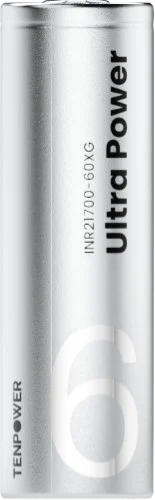
Tenpower INR21700-60XG |
|
| Form Factor | 21700 | 21700 | 21700 Tabless | 21700 Tabless |
| Chemistries | NCA | NCM/A | NCM/A | NCM/A |
| Typical Capacity | 4.0Ah | 5.0Ah | 5.0Ah | 6.0Ah |
| Nominal Voltage | 3.6V | 3.6V | 3.6V | 3.6V |
| Discharge Current | 35A | 35A | 60A | 60A |
| Energy Density | 200Wh/kg | 265Wh/kg | 265Wh/kg | 300Wh/kg |
| Contact for Sample | Contact for Sample | Contact for Sample | Contact for Sample | |
| Model | Typical Capacity (Ah) | Cathode Material | Anode Material | Nominal Voltage (V) | Approx. Weight (g) | Diameter (mm) | Continuous Max Discharge Current (A) | Acquire Datasheet |
| INR21700-40TG | 4.0 | NCA | Gr,SiO | 3.6 | 67 | Φ21 | 35 | 
|
| INR21700-50SG | 5.0 | NCM | Gr,SiO | 3.6 | 70 | Φ21 | 35 |
|
| INR21700-50XG | 5.0 | NCA | Gr,SiO | 3.6 | 70 | Φ21 | 50 |
|
| INR21700-60XG | 6.0 | NCA | Gr,SiC | 3.6 | 73 | Φ21 | 50 |
|
| INR18650-20SG | 2.0 | NMC | Gr | 3.6 | 43 | Φ18 | 30 |
|
| INR18650-30PG | 3.0 | NCM | Gr,SiC | 3.6 | 47 | Φ18 | 30 |
|
| INR21700-40TG | 4.0 | NCA | Gr,SiO | 3.6 | 67 | Φ21 | 35 |
|
| INR21700-50XG | 5.0 | NCA | Gr,SiO | 3.6 | 70 | Φ21 | 50 |
|
| IFR26700-45HE | 4.5 | LFP | Gr | 3.2 | 98 | Φ26 | 9 |
|
| IFR26700-50HE | 5.0 | LFP | Gr | 3.2 | 95 | Φ26 | 10 |
|
Following the launch of Tenpower’s Malaysia manufacturing base in 2025, the future Indonesia facility will work together with the Malaysia site to create a coordinated overseas manufacturing network.
 Full Article
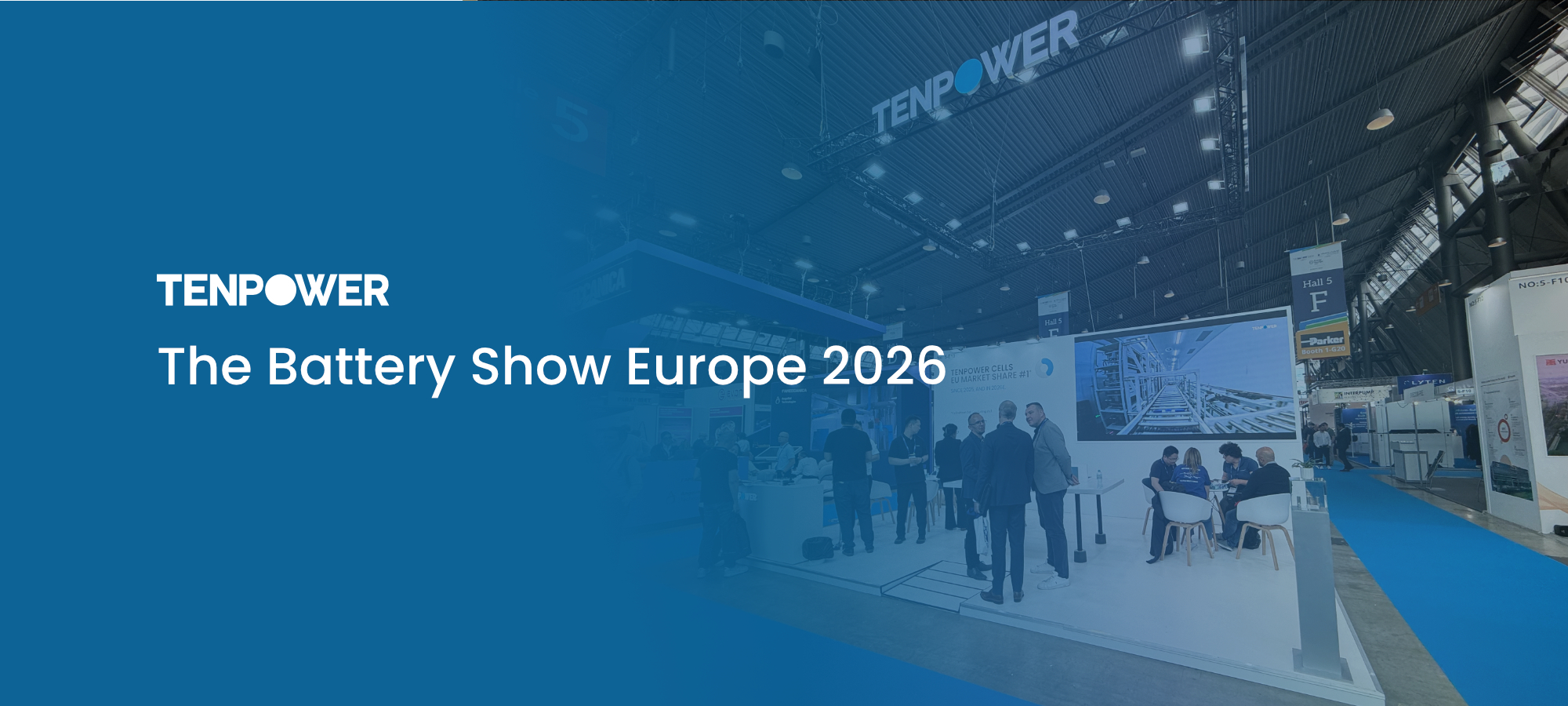
At The Battery Show Europe 2026, Tenpower showcased its portfolio of high-performance Tabless cylindrical lithium battery cells, presenting solutions for power tools, light mobility, intelligent robotics, low-altitude aviation, and AI data center backup power (BBU) applications.
 Full Article
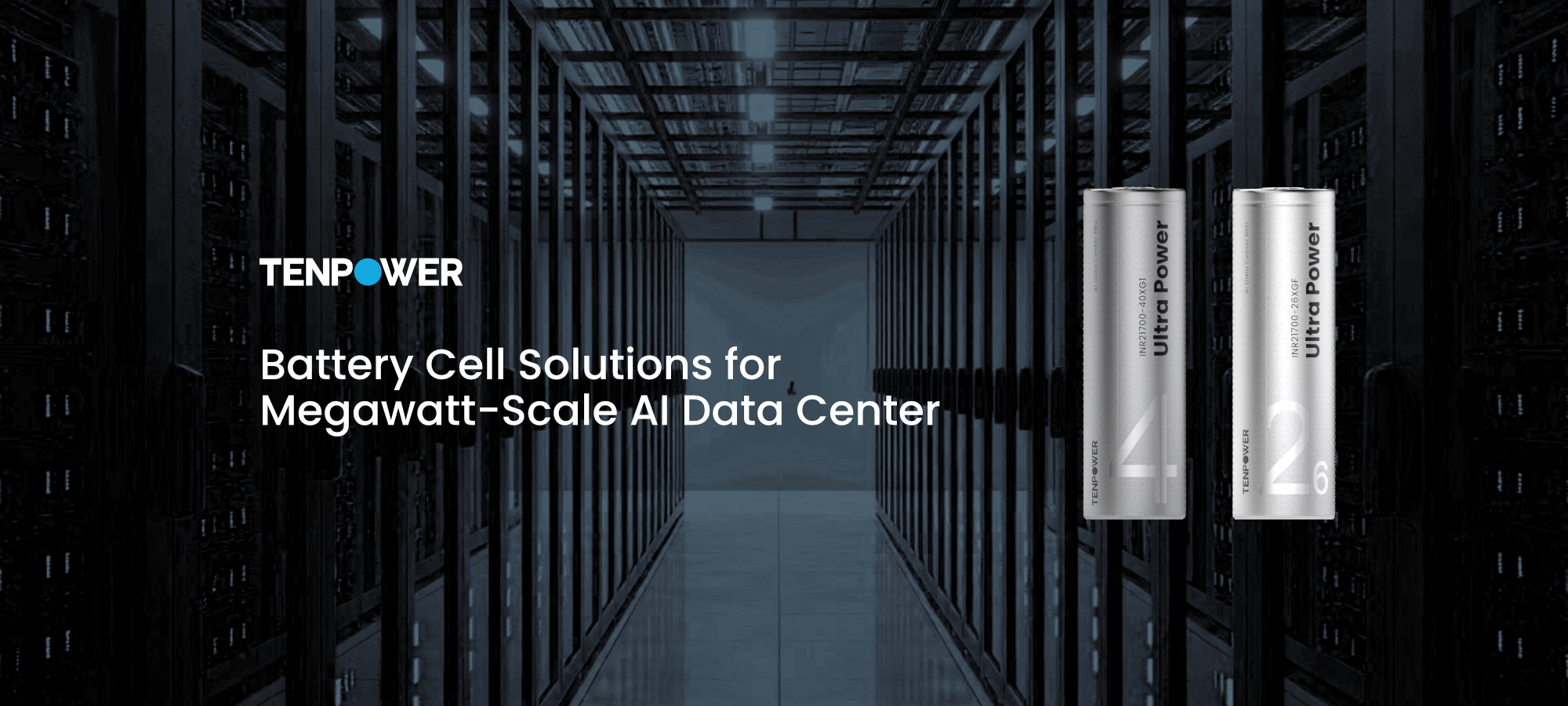
March 25, 2026, Florida, USA — At the International Battery Seminar & Exhibition (IBSE 2026), Tenpower officially introduced its next-generation 21700 cylindrical battery cells for Backup Battery Unit (BBU) applications.
 Full Article
Battery cells for robotic applications should be selected based on power requirements, energy density, operating time, weight, safety performance, and available space. Cylindrical lithium-ion cells are one option for mobile robots because they offer standardized dimensions, flexible pack configurations, and a range of energy and power characteristics. The optimal cell depends on the robot's operating profile and battery system design.
Cylindrical lithium-ion cells offer standardized form factors, established manufacturing processes, and flexible configurations for battery pack design. Depending on the model, they can balance energy capacity, discharge performance, and heating characteristics. These features make them suitable candidates for evaluating in humanoid robots, quadruped robots, wheeled robots, AGVs, and other mobile robotic platforms.
Key requirements typically include sufficient energy capacity, high-power capability when needed, manageable weight, reliable temperature rise, appropriate cycle life, and compatibility with the robot's charging system. The relative importance of each factor depends on the robot's workload, movement patterns, operating hours, and charging schedule. Battery selection should therefore begin with a clear understanding of the application's duty cycle.
Start by defining the robot's operating voltage, average and peak power demand, target runtime, allowable battery weight, installation space, and charging requirements. Then compare candidate cells based on capacity, continuous and pulse discharge ratings, energy density, voltage behavior, temperature rise, and cycle life. Final selection should be validated through representative load testing at both cell and battery-pack levels.
A single cell model may be suitable for multiple robot platforms if its electrical, thermal, mechanical, and lifetime characteristics meet each application's requirements. However, different platforms may require different series and parallel configurations, protection strategies, and thermal designs. Each application should be evaluated independently rather than assuming that a cell validated for one robot will automatically perform equally well in another.
Quadruped robots may experience changing power demands during walking, running, climbing, jumping, and navigating uneven terrain. Their battery systems must balance discharge capability, energy capacity, weight, and thermal management. The appropriate cell should be selected based on representative movement cycles, terrain conditions, payload, and expected operating time.
Runtime can potentially be improved by selecting cells with suitable energy density and capacity, reducing avoidable electrical losses, and matching discharge performance to the robot's workload. Battery pack weight, motor efficiency, control algorithms, cooling systems, and operating patterns also affect energy consumption. A complete runtime improvement strategy should therefore evaluate the entire robot power system rather than relying on cell capacity alone.
Tabless technology can help reduce internal electrical resistance, potentially improving voltage response and reducing resistive heat generation under high-current loads. These characteristics are relevant to robots that frequently accelerate, lift loads, or perform other power-intensive movements. The actual benefit should be evaluated using the specific cell's electrical and thermal data under representative operating conditions.
High-power cells can generate substantial heat when delivering high current, especially during repeated or prolonged high-load events. Whether overheating occurs depends on cell resistance, current profile, ambient temperature, pack design, and heat dissipation. Engineers should validate temperature rise under realistic operating cycles and ensure that the battery management and thermal protection systems operate within defined limits.

We collaborate and partner up with our suppliers who share our commitment to keeping high standards.
We provide comprehensive cylindrical lithium-ion battery cells and customizable solutions for the world.

We strive to empower more people to enjoy the benefits of the latest lithium-ion battery technology.
