CELLS FORAI DATA CENTER BBU

March 25, 2026 | Florida, United States

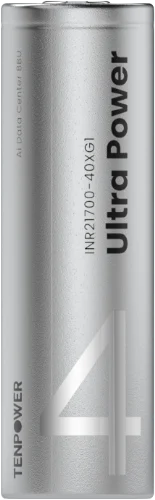
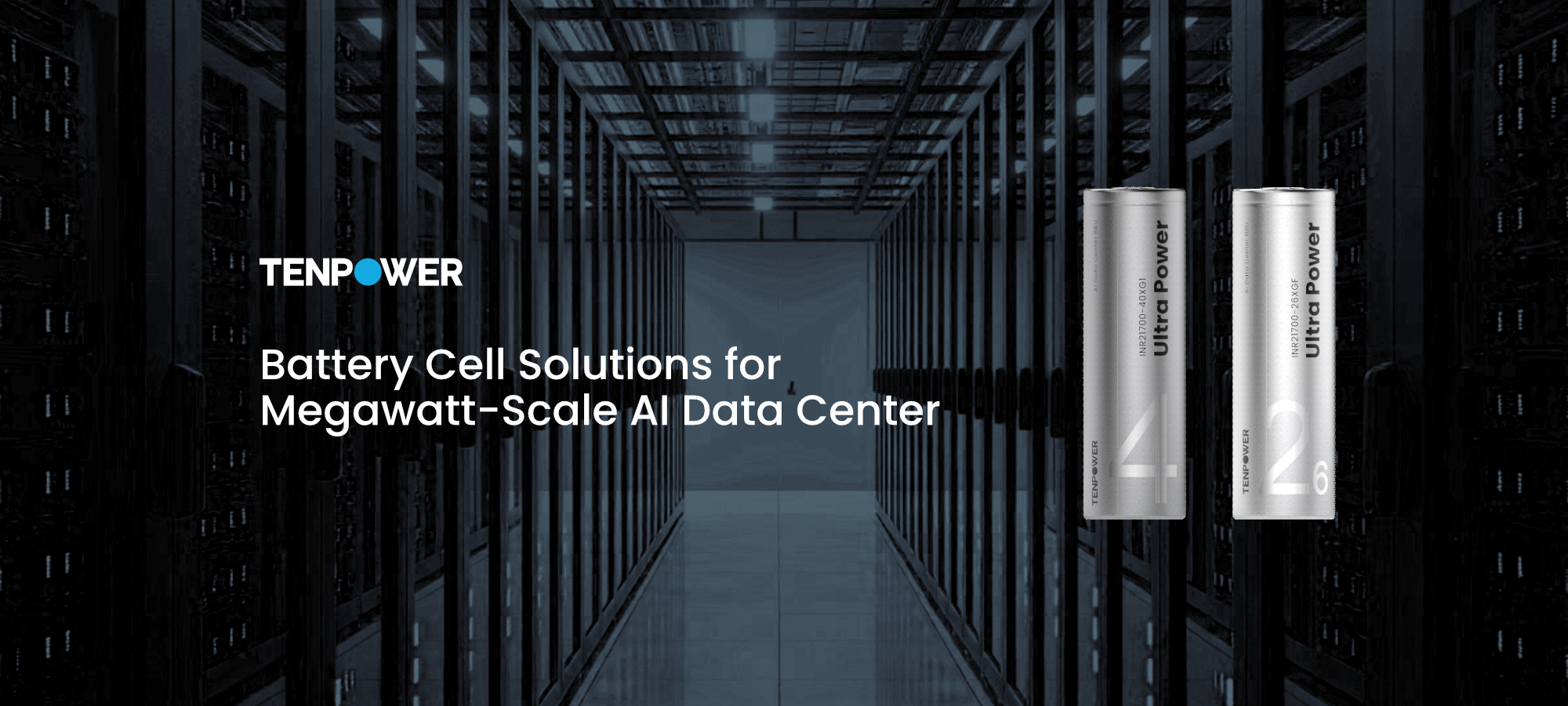
We were proud to participate in the International Battery Seminar & Exhibition (IBSE 2026), where we officially introduced our next-generation cylindrical cells for BBU (Backup Battery Unit) applications in AI data centers: the 21700-40XG1 and 21700-26XGF.

LFP & NCA

The Dual-Path Solution for AI Data Center BBUs

As AI computing advances rapidly, GPU power consumption continues to increase, driving higher rack-level power density while BBU space remains highly constrained. Delivering higher power within a limited footprint has become a key challenge for next-generation BBU systems.

To address this challenge, we developed the 40XG1 and 26XGF cells for demanding BBU applications. Through advanced high-rate design, long-life chemistry, and enhanced thermal performance, these cells deliver high-power response, long-term reliability, and compliance with stringent safety standards such as UL9540A.

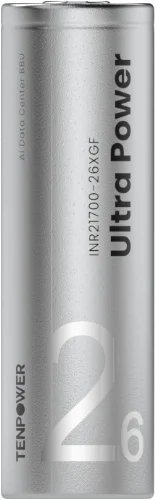
IFR21700-26XGF

By harnessing the intrinsic safety and cycle-life advantages of LFP chemistry, the 26XGF integrates a full-tab architecture with an advanced electrolyte system to achieve breakthrough improvements in rate capability. It delivers exceptional thermal robustness while satisfying the high-power and high-reliability requirements of 800V BBU architectures.

INR21700-40XG1

Leveraging the high energy density and power capability of NCM chemistry, the 40XG1 cell incorporates cathode interface stabilization and thermal enhancement technologies to suppress parasitic reactions under elevated temperatures, thereby improving safety margins during UL9540A thermal runaway testing.

Exceptional Power Density for High-Density Rack Deployment

Exceptional Power Density for High-Density Rack Deployment With industry-leading high-rate discharge performance, the cell supports rack-level backup power of up to 1.2 MW, enabling substantially higher power density than conventional battery architectures. It is optimized for AI clusters, hyperscale data centers, and other applications requiring rapid high-power response. Higher rack-level output reduces the number of parallel battery strings, simplifies system topology, lowers system complexity, and maximizes power delivery within limited rack space.

Extended Calendar Life for Lower Total Cost of Ownership (TCO)

Validated through accelerated aging testing, the cell delivers a calendar life exceeding six years under typical backup power operating conditions. Its low-capacity-fade characteristics help maintain consistent backup performance throughout the service life while reducing battery replacement frequency and maintenance requirements. The result is a lower Total Cost of Ownership (TCO), making it well suited for mission-critical infrastructure requiring continuous 24/7 operation.

Intrinsically Safe Design for Enhanced System-Level Safety

The cell is engineered based on a comprehensive understanding of thermal runaway initiation and gas evolution mechanisms. Multi-level optimization of the material system, electrode structure, and venting design helps suppress thermal propagation while controlling heat and gas release during failure events. These intrinsic safety characteristics contribute to improved system-level performance in UL9540A thermal runaway testing, supporting lower temperature rise, reduced gas generation, and limited flame propagation. This provides system integrators with greater confidence in safety qualification and regulatory compliance.

Choosing the right
battery cells
for your AI data center
battery backup unit

Tenpower
Next-Gen Solution

IFR21700-26XGF

Tenpower
Next-Gen Solution

INR21700-40XG1

General
Purpose

18650 2.5Ah


Form Factor 21700 Tabless 21700 Tabless 18650
Chemistries LFP NCA NCA
Typical Capacity 2.5Ah 4.0Ah 2.5Ah
Nominal Voltage 3.2V 3.6V 3.6V
 

Discharge Power 170W 200W 120W
UL9540A Thermal Runaway Sm oking Only No Side Cracking -
 
  Contact for Sample Contact for Sample  
APPLIED BATTERY MODEL
BBU
UPS
ESS
Model Typical Capacity (Ah) Cathode Material Anode Material Nominal Voltage (V) Approx. Weight (g) Diameter (mm) Continuous Max Discharge Current (A) Acquire Datasheet
INR18650-20SG 2.0 NMC Gr 3.6 43 Φ18 30
INR18650-25SG 2.5 NCA Gr,SiC 3.6 45 Φ18 35
INR18650-20SG 2.0 NMC Gr 3.6 43 Φ18 30
INR18650-25SG 2.5 NCA Gr,SiC 3.6 45 Φ18 35
IFR26700-45HE 4.5 LFP Gr 3.2 98 Φ26 9
IFR26700-50HE 5.0 LFP Gr 3.2 95 Φ26 10

TECHNICAL ARTICLES

Tenpower Expands Global Manufacturing Footprint with 5GWh Cylindrical Battery Project in Indonesia


Following the launch of Tenpower’s Malaysia manufacturing base in 2025, the future Indonesia facility will work together with the Malaysia site to create a coordinated overseas manufacturing network.

Tenpower Expands Global Manufacturing Footprint with 5GWh Cylindrical Battery Project in Indonesia
Full Article

Tenpower Showcases High-Performance 7.0Ah Battery Cell


At The Battery Show Europe 2026, Tenpower showcased its portfolio of high-performance Tabless cylindrical lithium battery cells, presenting solutions for power tools, light mobility, intelligent robotics, low-altitude aviation, and AI data center backup power (BBU) applications.

Tenpower Showcases High-Performance 7.0Ah Battery Cell
Full Article

Tenpower Launches Next-Generation BBU Battery Cells for AI Data Centers


March 25, 2026, Florida, USA — At the International Battery Seminar & Exhibition (IBSE 2026), Tenpower officially introduced its next-generation 21700 cylindrical battery cells for Backup Battery Unit (BBU) applications.

Tenpower Launches Next-Generation BBU Battery Cells for AI Data Centers
Full Article

QUESTIONS? ANSWERS.

What is a Battery Backup Unit (BBU)?

A Battery Backup Unit (BBU) is a backup power system that provides short-term power to servers, storage systems, and AI computing equipment during power interruptions. Unlike traditional UPS systems, modern rack-level BBUs are installed closer to the load, reducing power conversion losses while improving energy efficiency and response speed. They are becoming an important part of AI data centers and high-density server infrastructure.

Tenpower's high-power cylindrical lithium-ion cells are optimized for BBU applications, delivering high discharge capability, fast charging, long cycle life, and excellent thermal performance.

Why are AI data centers adopting Rack-level BBUs?

As GPU power consumption continues to increase, centralized UPS systems face challenges in efficiency, scalability, and rack utilization. Rack-level BBUs provide localized energy storage close to AI servers, enabling faster backup response, lower energy loss, and higher overall system efficiency.

They are particularly suitable for high-density AI servers requiring stable and instantaneous backup power.

What battery cells are best for server BBUs?

High-power lithium-ion cylindrical cells are widely used in modern server BBUs because they combine high energy density, excellent discharge capability, and long calendar life.

For AI server backup systems, selecting cells with low internal resistance, high pulse power, and strong thermal stability is critical to ensuring reliable operation.

Why choose 21700 cylindrical cells for BBU applications?

21700 cylindrical lithium-ion cells offer an excellent balance between energy density, power output, thermal performance, and manufacturing consistency.

Compared with smaller formats, 21700 cells provide higher capacity while maintaining outstanding power capability, making them ideal for AI server BBUs and data center backup power systems.

What are the advantages of high-power lithium-ion cells in BBUs?

High-power lithium-ion cells provide fast response, high pulse discharge capability, low internal resistance, and long cycle life. These characteristics allow Battery Backup Units to deliver reliable power instantly during outages while supporting high-load AI servers.

Tenpower's tabless cylindrical cells are engineered to minimize heat generation and maximize power output, making them well suited for demanding BBU applications.

BBU vs UPS: What is the difference?

A UPS supplies backup power to an entire electrical system, while a Battery Backup Unit is typically integrated closer to servers or racks. Rack-level BBUs reduce conversion losses, improve energy efficiency, and enable modular deployment.

Many next-generation AI data centers combine centralized UPS systems with rack-level BBUs to optimize reliability and efficiency.

What should you consider when selecting a BBU battery supplier?

When evaluating a BBU battery supplier, consider cell performance, manufacturing consistency, quality certifications, long-term supply capability, and application experience in AI servers and data centers.

An experienced cylindrical cell manufacturer can provide reliable products, stable production capacity, and customized solutions for demanding backup power applications.


Newsroom
Newsroom

All the news you need to know about Tenpower.


Learn More...
Suppliers Information

We collaborate and partner up with our suppliers who share our commitment to keeping high standards.


Learn More...
Products
Products

We provide comprehensive cylindrical lithium-ion battery cells and customizable solutions for the world.


Learn More...
About
About

We strive to empower more people to enjoy the benefits of the latest lithium-ion battery technology.


Learn More...